
United States • 50 U.S. cents
Draped Bust Half Dollar — Small Eagle
Draped Bust Half Dollar — Small Eagle coins belong to the early United States silver series. Covered issue-date labels are 1796–1797 face dates. A matching reference uses 13.48 nominal gross grams, .892 fineness and 0.3866 fine silver troy ounce. These early figures must not be replaced with a blanket 90% silver assumption. Use an individual photo appraisal before making a selling decision about an early coin.
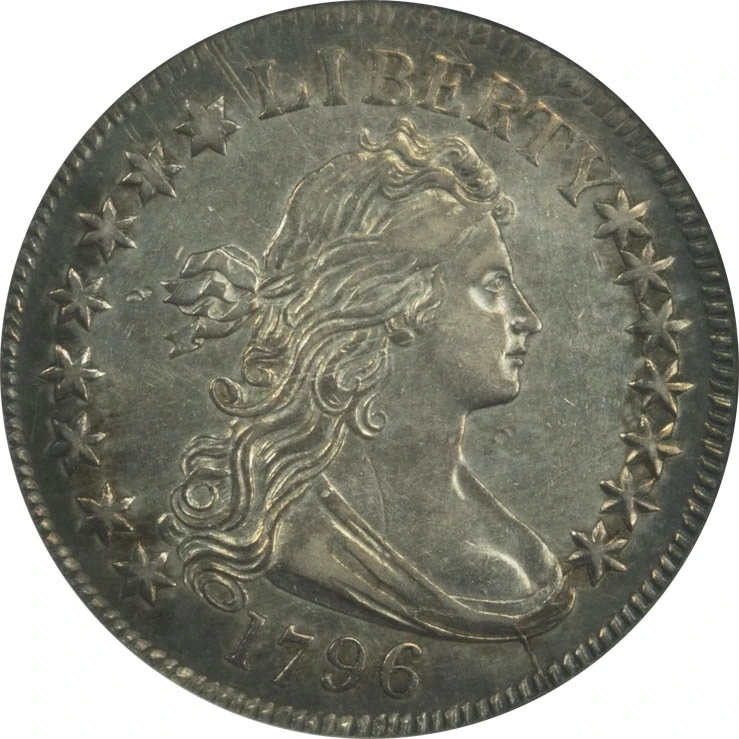
Lost Dutchman Rare Coins / Wikimedia Commons / CC BY-SA 3.0 US Changes: Complete acquired photograph retained; no crop. Native739×739 pixel dimensions retained; no enlargement. Converted to WebP quality92. No retouching, synthetic reconstruction or rim trimming. · Image source · CC BY-SA 3.0 US
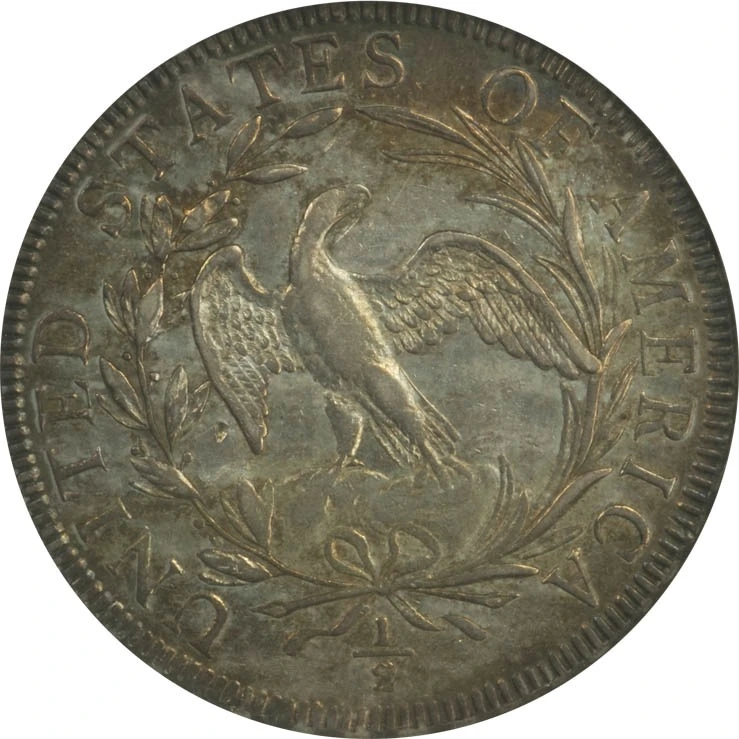
Lost Dutchman Rare Coins / Wikimedia Commons / CC BY-SA 3.0 US Changes: Complete acquired photograph retained; no crop. Native739×739 pixel dimensions retained; no enlargement. Converted to WebP quality92. No retouching, synthetic reconstruction or rim trimming. · Image source · CC BY-SA 3.0 US
When a fresh spot bid is available, melt values use fine-metal content × spot bid. CashForCoins guide buying offers use the separately configured percentage for each metal. Selected rare/numismatic coins require an appraisal. Dollar amounts remain unavailable when a fresh quote or buying percentage is missing.
Verified coin specifications
- Country
- United States
- Face denomination
- 50 U.S. cents
- Composition
- 89.2% silver (rounded dated reference fineness); remaining alloy not independently itemized
- Gross weight (grams)
- 13.48
- Fineness
- 0.892
- Fine-metal weight (troy oz)
- 0.3866
- Diameter (mm)
- 32.5
- Edge
- Lettered
- Mint
- Philadelphia
- Mint mark
- None
- Restrikes
- Later proofs, restrikes and disputed types excluded from ordinary scope
- Issue years
- 1796–1797 face dates
Actual source-observed issue-date labels for the bounded denomination, design and nominal standard. Catalogue endpoints do not imply annual mint production; overdates and proof/mint combinations remain type-specific. Specimen measurements and images do not certify another coin.
- Source precision
- The retained matching reference uses 13.48 nominal gross grams, 0.892 fineness and 0.3866 fine silver troy ounce. Source-specific precision and any disagreement are documented in References. Actual specimen measurements do not replace the nominal reference.
Calculate this coin’s metal content
Formula: specified fine-metal troy ounces × quantity. Dollar melt value additionally requires an approved current metal price.
Obverse: identify the front
The obverse shows Liberty facing right with drapery at the bust and the date below. Record the complete stars, hair details and date rather than relying on the portrait alone. The pictured specimen must be distinguished from the full set of covered varieties.
Reverse: identify the back
The reverse has a smaller naturalistic eagle within a wreath. Keep the wreath, wing detail and surrounding legend in the photograph. A fraction ½ appears on the Small Eagle reverse. The edge carries the half-dollar value lettering.
History and purpose
The Draped Bust design belongs to an earlier period than Seated Liberty or Barber silver. This half dollar guide separates the Small Eagle reverse from the later heraldic design. Changes in appearance are useful for attribution but do not, by themselves, prove a purity change.
How to identify this variant
Match the full date, both faces, denomination markers and edge before choosing a reference. Keep different early denominations separate even when the portraits resemble one another. A plausible weight supports comparison; it does not authenticate the metal, date, surfaces or variety.
Understanding its metal content
Each matching draped bust half dollar — small eagle contains 0.3866 reference fine silver troy ounce. Three contribute 1.1598 fine silver troy ounce and 40.44 nominal gross grams. The 89.2% reference fineness distinguishes silver content from total alloy mass. Melt value reflects metal content; early collectible coins require individual appraisal.
Dates, varieties and composition changes
Covered face dates are 1796 and 1797. The 1796 obverse has recognized 15-star and 16-star designs. A face date does not always establish the manufacturing year; part of the 1796-dated production is attributed to the following year.
Melt value versus collector value
Keep early coins individually identifiable by date, type and known attribution. Preserve original surfaces, old photographs, certificates and ownership records. Cleaning or polishing can remove evidence needed for assessment. A worn coin can still merit careful attribution; an attractive portrait is not sufficient to assign a grade or rarity premium.
Authenticity and condition
Supply clear images of both complete faces and the edge. Include measured mass and diameter if available and describe any uncertainty in the date or reverse. Altered dates, counterfeit metal, repairs and disputed varieties need individual review. Do not perform a destructive test merely to prepare an enquiry.
Selling this coin
Request a CashForCoins photo appraisal for a draped bust half dollar — small eagle. Keep its date, mint attribution, reverse design and available measurements together. Photograph both complete faces and the edge, and retain certificates or ownership records. Keep different denominations and weight periods separate so an appraiser can assess each collectible type accurately.
Sources and calculation methodology
The matching dated reference supplies 13.48 nominal gross grams, 0.892 fineness, 0.3866 fine silver troy ounce and a 32.5 mm reference diameter. Listed issue-date labels correspond to the stated reverse design. An overdate stays under the date actually displayed; later proofs, restrikes and other denominations remain separate where noted. Nominal specifications and actual specimen measurements answer different questions. Reference-specific precision is attributed in References. Sources were reviewed on 2026-10-12.
Common questions
Which dates are covered?
1796–1797 face dates. Match the stated reverse design as well as the date.Is every early U.S. silver coin 90% silver?
No. Do not apply a later purity to an earlier type without a matching specification.Can a metal calculation replace an appraisal?
No. Individual date, variety, condition and authenticity can affect a collectible assessment.References
- NGC early silver dated and design reference — Design identification; Identity of the exact denomination/type; observed actual dates and reverse scope (checked 2026-10-12)
- NGC early silver dated and design reference — observed actual dates and reverse scope (checked 2026-10-12)
- NGC matching early silver nominal specification — nominal weight in grams, fineness, ASW and diameter or diameter range (checked 2026-10-12)
- NGC historical denomination and edge presentation — SmallEagle½reverse;Heraldicfractionomitted;valueletteringonlargerearlysilvercoins (checked 2026-10-12)
- NGC 1797 Small Eagle half dollar specification — Reference diameter 32.5 mm; Actual rendered dated panel:13.48g/.892/.3866oz/32.5mm/Lettered (checked 2026-10-12)
- Genuine coin image and independent permission — Independent CC BY-SA 3.0 US permission; creator/credit Lost Dutchman Rare Coins; genuine source photograph or scan; actual paired source photographs and optimized faces reviewed independently; publication remains a separate decision. Wikimedia permission ticket 2013072110000842. (checked 2026-10-12)
- Genuine coin image and independent permission — Independent CC BY-SA 3.0 US permission; creator/credit Lost Dutchman Rare Coins; genuine source photograph or scan; actual paired source photographs and optimized faces reviewed independently; publication remains a separate decision. Wikimedia permission ticket 2013072110000842. (checked 2026-10-12)
Issue-year references
- NGC early silver dated and design reference
- NGC early silver dated and design reference
- NGC matching early silver nominal specification
- NGC historical denomination and edge presentation
- NGC 1797 Small Eagle half dollar specification
Content maintained by CashForCoins. Last substantive record update: 2026-10-13. Report a specification or attribution issue through our contact page.
Have this coin or a collection?
Photographs can help identify your coin. An appraisal may consider authenticity, condition and collector demand as well as metal content.
Request a photo appraisal View current silver coin buying information