
United States • 50 U.S. cents
Draped Bust Half Dollar — Heraldic Eagle
Draped Bust Half Dollar — Heraldic Eagle coins belong to the early United States silver series. Covered issue-date labels are 1801–1803; 1805–1807. A matching reference uses 13.4800 nominal gross grams, .892 fineness and 0.3866 fine silver troy ounce. These early figures must not be replaced with a blanket 90% silver assumption. Use an individual photo appraisal before making a selling decision about an early coin.
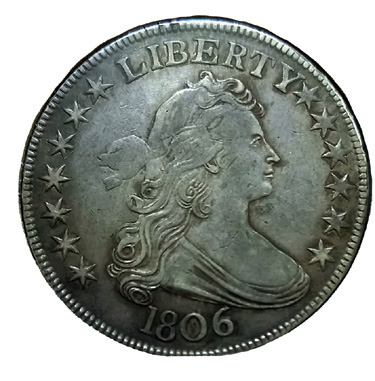
DD1380 / Wikimedia Commons / CC BY-SA 4.0 Changes: Separated this complete face from the paired photograph at the declared join; full image height and coin rim retained. Native375×381 pixel dimensions retained; no enlargement. Converted to lossless WebP. No retouching, synthetic reconstruction or rim trimming. · Image source · CC BY-SA 4.0
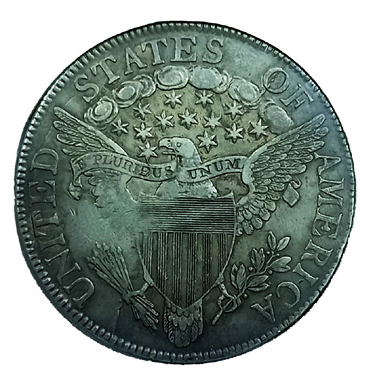
DD1380 / Wikimedia Commons / CC BY-SA 4.0 Changes: Separated this complete face from the paired photograph at the declared join; full image height and coin rim retained. Native375×381 pixel dimensions retained; no enlargement. Converted to lossless WebP. No retouching, synthetic reconstruction or rim trimming. · Image source · CC BY-SA 4.0
When a fresh spot bid is available, melt values use fine-metal content × spot bid. CashForCoins guide buying offers use the separately configured percentage for each metal. Selected rare/numismatic coins require an appraisal. Dollar amounts remain unavailable when a fresh quote or buying percentage is missing.
Verified coin specifications
- Country
- United States
- Face denomination
- 50 U.S. cents
- Composition
- 89.2% silver (rounded dated reference fineness); remaining alloy not independently itemized
- Gross weight (grams)
- 13.48
- Fineness
- 0.892
- Fine-metal weight (troy oz)
- 0.3866
- Diameter (mm)
- 32.5
- Edge
- Lettered
- Mint
- Philadelphia
- Mint mark
- None
- Restrikes
- Later proofs, restrikes and disputed types excluded from ordinary scope
- Issue years
- 1801–1803; 1805–1807
Actual source-observed issue-date labels for the bounded denomination, design and nominal standard. Catalogue endpoints do not imply annual mint production; overdates and proof/mint combinations remain type-specific. Specimen measurements and images do not certify another coin.
- Source precision
- The retained matching reference uses 13.4800 nominal gross grams, 0.8920 fineness and 0.3866 fine silver troy ounce. Source-specific precision and any disagreement are documented in References. Actual specimen measurements do not replace the nominal reference.
Calculate this coin’s metal content
Formula: specified fine-metal troy ounces × quantity. Dollar melt value additionally requires an approved current metal price.
Obverse: identify the front
The obverse shows Liberty facing right with drapery at the bust and the date below. Record the complete stars, hair details and date rather than relying on the portrait alone. The pictured specimen must be distinguished from the full set of covered varieties.
Reverse: identify the back
The reverse has a heraldic eagle with a breast shield. Show the complete eagle, stars, clouds, surrounding legend and lower field in the photograph. Unlike the Small Eagle half, this reverse omits the ½ fraction. Read the value on the lettered edge instead of requiring a later 50 C. reverse design.
History and purpose
The Draped Bust design belongs to an earlier period than Seated Liberty or Barber silver. This half dollar guide separates the Heraldic Eagle reverse from the preceding Small Eagle design. Changes in appearance are useful for attribution but do not, by themselves, prove a purity change.
How to identify this variant
Match the full date, both faces, denomination markers and edge before choosing a reference. Keep different early denominations separate even when the portraits resemble one another. A plausible weight supports comparison; it does not authenticate the metal, date, surfaces or variety.
Understanding its metal content
Each matching draped bust half dollar — heraldic eagle contains 0.3866 reference fine silver troy ounce. Three contribute 1.1598 fine silver troy ounce and 40.4400 nominal gross grams. The 89.2% reference fineness distinguishes silver content from total alloy mass. Melt value reflects metal content; early collectible coins require individual appraisal.
Dates, varieties and composition changes
Covered original face dates are 1801,1802,1803,1805,1806 and 1807. No 1804 half dollar is inferred from the 1805/4 overdate. The 1807 Capped Bust half dollar is a different design and must remain separate from 1807 Draped Bust.
Melt value versus collector value
Keep early coins individually identifiable by date, type and known attribution. Preserve original surfaces, old photographs, certificates and ownership records. Cleaning or polishing can remove evidence needed for assessment. A worn coin can still merit careful attribution; an attractive portrait is not sufficient to assign a grade or rarity premium.
Authenticity and condition
Supply clear images of both complete faces and the edge. Include measured mass and diameter if available and describe any uncertainty in the date or reverse. Altered dates, counterfeit metal, repairs and disputed varieties need individual review. Do not perform a destructive test merely to prepare an enquiry.
Selling this coin
Request a CashForCoins photo appraisal for a draped bust half dollar — heraldic eagle. Keep its date, mint attribution, reverse design and available measurements together. Photograph both complete faces and the edge, and retain certificates or ownership records. Keep different denominations and weight periods separate so an appraiser can assess each collectible type accurately.
Sources and calculation methodology
The matching dated reference supplies 13.4800 nominal gross grams, 0.8920 fineness, 0.3866 fine silver troy ounce and a 32.5 mm reference diameter. Listed issue-date labels correspond to the stated reverse design. An overdate stays under the date actually displayed; later proofs, restrikes and other denominations remain separate where noted. Nominal specifications and actual specimen measurements answer different questions. Reference-specific precision is attributed in References. Sources were reviewed on 2026-10-12.
Common questions
Which dates are covered?
1801–1803; 1805–1807. Match the stated reverse design as well as the date.Is every early U.S. silver coin 90% silver?
No. Do not apply a later purity to an earlier type without a matching specification.Can a metal calculation replace an appraisal?
No. Individual date, variety, condition and authenticity can affect a collectible assessment.References
- NGC early silver dated and design reference — Design and actual dated issue scope; Identity of the exact denomination/type; observed actual dates and reverse scope (checked 2026-10-12)
- NGC matching early silver nominal specification — nominal weight in grams, fineness, ASW and diameter or diameter range (checked 2026-10-12)
- NGC historical denomination and edge presentation — SmallEagle½reverse;Heraldicfractionomitted;valueletteringonlargerearlysilvercoins (checked 2026-10-12)
- NGC1807HeraldicDraped half dated specification — independentlymatching1807nominal13.4800/.8920/.3866/32.5 (checked 2026-10-12)
- Genuine coin image and independent permission — Independent CC BY-SA 4.0 permission; creator/credit DD1380; genuine source photograph or scan; actual paired source photographs and optimized faces reviewed independently; publication remains a separate decision. (checked 2026-10-12)
Issue-year references
- NGC early silver dated and design reference
- NGC matching early silver nominal specification
- NGC historical denomination and edge presentation
- NGC1807HeraldicDraped half dated specification
Content maintained by CashForCoins. Last substantive record update: 2026-10-13. Report a specification or attribution issue through our contact page.
Have this coin or a collection?
Photographs can help identify your coin. An appraisal may consider authenticity, condition and collector demand as well as metal content.
Request a photo appraisal View current silver coin buying information