
United States • 1 U.S. dollar
American Silver Eagle — Landing Eagle Reverse
This American Silver Eagle guide covers the landing eagle design, dated 2021–2026. A correctly identified coin contributes one fine troy ounce of silver at .999 fineness, using the U.S. Mint’s declared silver-content specification. Its nominal diameter is 40.60 mm and face value is one dollar. Gross weight is left unavailable because the conflicting rounded reference is not used to reconstruct the fine-metal amount.
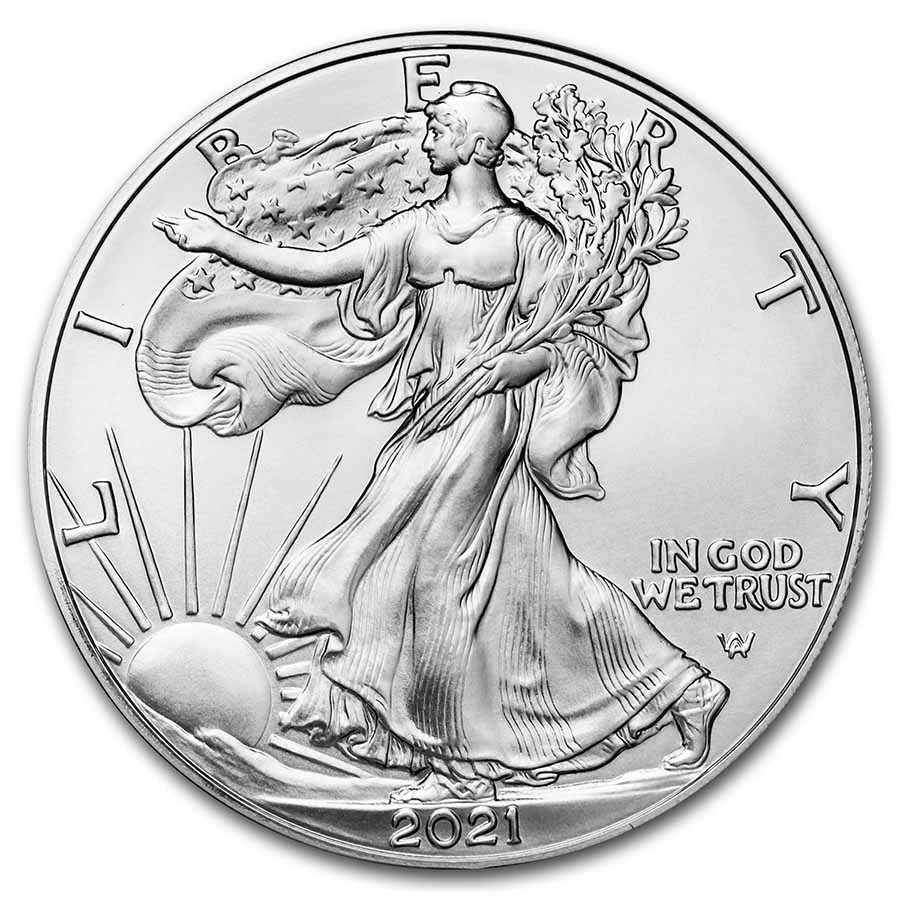
Images supplied by CashForCoins; used with permission. · Image source · CashForCoins website use authorized by site owner
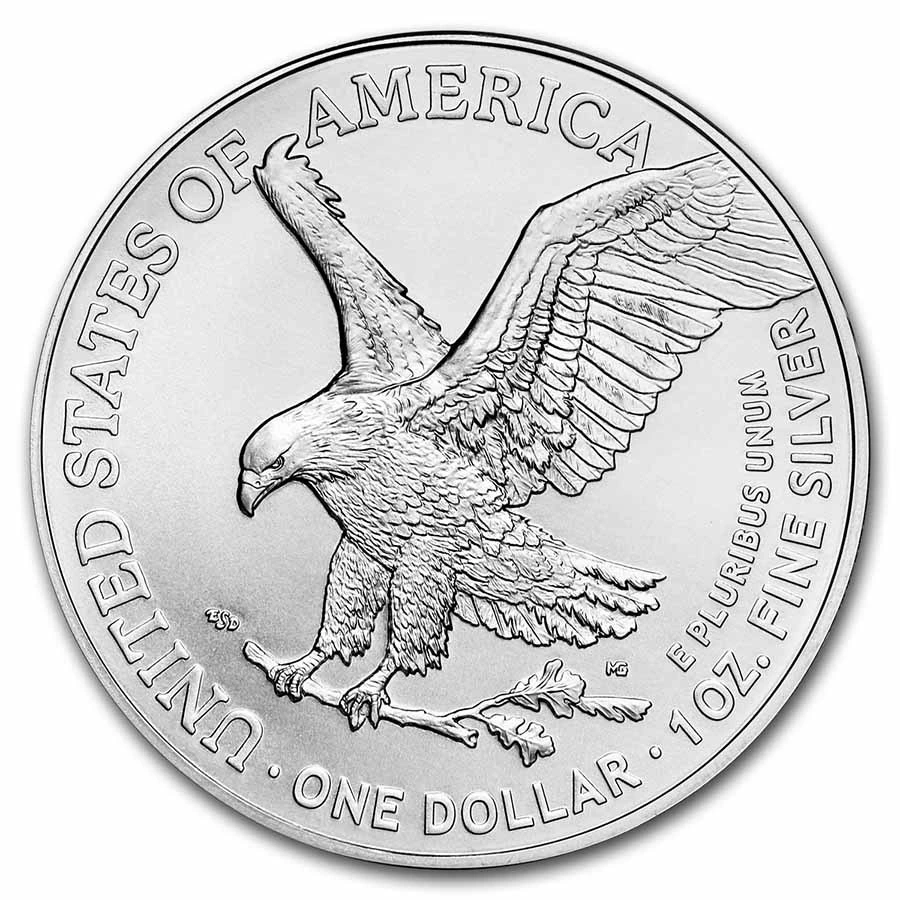
Images supplied by CashForCoins; used with permission. · Image source · CashForCoins website use authorized by site owner
When a fresh spot bid is available, melt values use fine-metal content × spot bid. CashForCoins guide buying offers use the separately configured percentage for each metal. Selected rare/numismatic coins require an appraisal. Dollar amounts remain unavailable when a fresh quote or buying percentage is missing.
Verified coin specifications
- Country
- United States
- Face denomination
- 1 U.S. dollar
- Composition
- 99.9% silver; balance alloy metal
- Fineness
- 0.999
- Fine-metal weight (troy oz)
- 1
- Diameter (mm)
- 40.6
- Edge
- Reeded
- Mint
- United States Mint; facility and finish vary by dated issue
- Mint mark
- Varies by finish and year
- Restrikes
- Original dated issues; identify both 2021 reverse designs separately
- Issue years
- 2021–2026
Normal issue dates within this profile. Read the guide for changing designs, mint/finish differences and excluded material standards.
- Source precision
- The calculator uses the U.S. Mint’s explicit one-fine-troy-ounce silver specification and .999 fineness. Gross mass is unavailable. The reference melt table’s displayed gross weight conflicts with one fine ounce, so that gross figure is not used. The fine amount is not multiplied by purity again. This source convention was approved by the CashForCoins owner on October 16, 2026.
Calculate this coin’s metal content
Formula: specified fine-metal troy ounces × quantity. Dollar melt value additionally requires an approved current metal price.
Obverse: identify the front
Walking Liberty strides toward the rising sun, with drapery, an outstretched arm and branches. Read LIBERTY, IN GOD WE TRUST and the actual date together. The supplied 2021 photograph illustrates the refreshed obverse, including Weinman’s artist mark. A familiar Liberty portrait is also found on older half dollars, which have a different denomination, size and metal standard.
Reverse: identify the back
Emily Damstra’s eagle descends with spread wings while carrying an oak branch. The surrounding legends identify the United States, one dollar and one ounce of fine silver. The supplied 2021 image shows this landing design clearly. The earlier shield-bearing heraldic eagle is a separate reverse identity, even when the coin also carries a 2021 date.
History and purpose
The U.S. Mint launched the American Eagle bullion program in 1986. The silver coin adapted Weinman’s Walking Liberty from the 1916 half dollar, pairing it with a new reverse. In 2021 the program introduced refreshed obverse details and the landing-eagle reverse. This record follows the landing eagle identity, keeping a dated design change separate from the shared one-ounce silver specification.
How to identify this variant
Confirm the one-dollar denomination, full date, correct reverse, fine-silver inscription and nominal diameter before adding a quantity. Bullion and collector versions can share the same basic design, while mint marks, surface preparation and packaging differ. A bright surface is not enough to identify a proof, and a missing visible mint mark does not establish a striking facility. Record uncertain attribution separately.
Understanding its metal content
Each matching coin adds one fine troy ounce of silver. Three coins therefore add three fine troy ounces, before any individual authenticity or condition assessment. The U.S. Mint’s silver-weight declaration is already a fine-metal amount; multiplying it by .999 again would understate that declared content. The calculator leaves gross alloy mass unavailable instead of inventing a value from incompatible rounded measurements.
Dates, varieties and composition changes
The landing-eagle reverse begins in 2021 and continues through the reviewed 2026 issue. Original and landing reverses both occur in 2021. Some 2026 collector products carry a 1776–2026 dual date and a Liberty Bell 250 privy; that feature must not be assumed on every earlier or ordinary bullion coin. Proof, reverse-proof and enhanced finishes need their own attribution.
Melt value versus collector value
Melt value describes the silver content at a current market bid. It does not establish a collector premium, certification grade or value for an unusual finish. Preserve original boxes, certificates and grading holders. If a coin may have special collector interest, request an individual appraisal before treating it only as silver. The one-ounce reference is shared metal content, not a promise that all dates or finishes have equal market value.
Authenticity and condition
Compare both faces, legends, dimensions and the edge as a group. A correct diameter or a plausible weight does not by itself prove authenticity. Silver-plated replicas and privately issued rounds must not be counted as official Silver Eagles merely because they copy Liberty or an eagle. Avoid cleaning, polishing, scratching or acid-testing a coin. Use clear whole-rim photographs and professional assessment for uncertain specimens.
Selling this coin
Add the confirmed quantity to your collection or offer estimate, keeping this reverse separate from other silver types. Record dates, finish, packaging and any certification. The guide can calculate a current melt value and a bid when a fresh quote is available. Coins requiring collector assessment should be submitted through the appraisal link; a general guide bid does not settle authenticity, grade or special premiums.
Sources and calculation methodology
The selected silver-content source is the U.S. Mint’s explicit Silver Weight of 1.000 troy ounce. Its .999 alloy fineness describes composition and is not deducted again from that fine amount. A conflicting gross-weight display in the reference melt reference is excluded; no verified gross mass is assigned here. The supplied photographs illustrate the correct reverse identity. Live prices are obtained separately from coin specifications.
Common questions
Does every 2021 Silver Eagle have this reverse?
No. Both the original heraldic eagle and the new landing eagle were issued in 2021. Identify the reverse visually.Why is gross weight unavailable?
This guide uses the Mint’s explicit one-fine-ounce specification. It does not use a conflicting rounded gross-weight reference or invent a gross mass.Should .999 be multiplied by the one-ounce content?
No. The one-ounce amount is already stated as fine-silver weight. Multiplying by purity again would understate that declaration.References
- U.S. Mint: American Eagle program and reverse-design history — identity; dates program launched 1986 and reverse transition 2021; design Walking Liberty, original heraldic eagle and later landing eagle; bullion and collector finishes distinguished (checked 2026-10-16)
- U.S. Mint: Silver Eagle composition, diameter and artist credits — identity; fineness 99.9% silver; diameter 40.60 mm; reeded edge; dates 1986 onward with reverse change 2021; design Weinman, Mercanti and Damstra (checked 2026-10-16)
- U.S. Mint: explicit 2024 fine-silver specification — identity one-dollar Silver Eagle; weight explicitly Silver Weight 1.000 troy oz; fineness .999; diameter 40.60 mm; dates 2024; design landing eagle (checked 2026-10-16)
- U.S. Mint: 2021 paired reverse designs — identity both Silver Eagle reverse designs issued with 2021 date; fineness .999; dates 2021; original and redesigned reverse-proof collector coins (checked 2026-10-16)
- U.S. Mint: 2025 one-ounce silver issue — identity; weight one troy ounce fine silver; fineness .999; dates 2025; design landing eagle and enhanced obverse (checked 2026-10-16)
- U.S. Mint: 2026 silver issue and anniversary markings — identity; weight Silver Weight 1.000 troy ounce; fineness .999; diameter 40.60 mm; dates 2026; design landing eagle with 1776–2026 obverse dates and Liberty Bell 250 privy on this collector product (checked 2026-10-16)
Issue-year references
- U.S. Mint: American Eagle program and reverse-design history
- U.S. Mint: Silver Eagle composition, diameter and artist credits
- U.S. Mint: explicit 2024 fine-silver specification
Content maintained by CashForCoins. Last substantive record update: 2026-10-16. Report a specification or attribution issue through our contact page.
Have this coin or a collection?
Photographs can help identify your coin. An appraisal may consider authenticity, condition and collector demand as well as metal content.
Request a photo appraisal View current silver coin buying information