Saint-Gaudens Double Eagle — 1907 Roman-Date High Relief
Saint-Gaudens Double Eagle — 1907 Roman-Date High Relief has nominal fine gold of 0.9675 troy oz (30.092614 g) at the historical .900 standard. This is the original 1907 Roman-date High Relief $20 type. It excludes the earlier ultra-high-relief patterns and the modern 2009 Ultra High Relief gold coin.
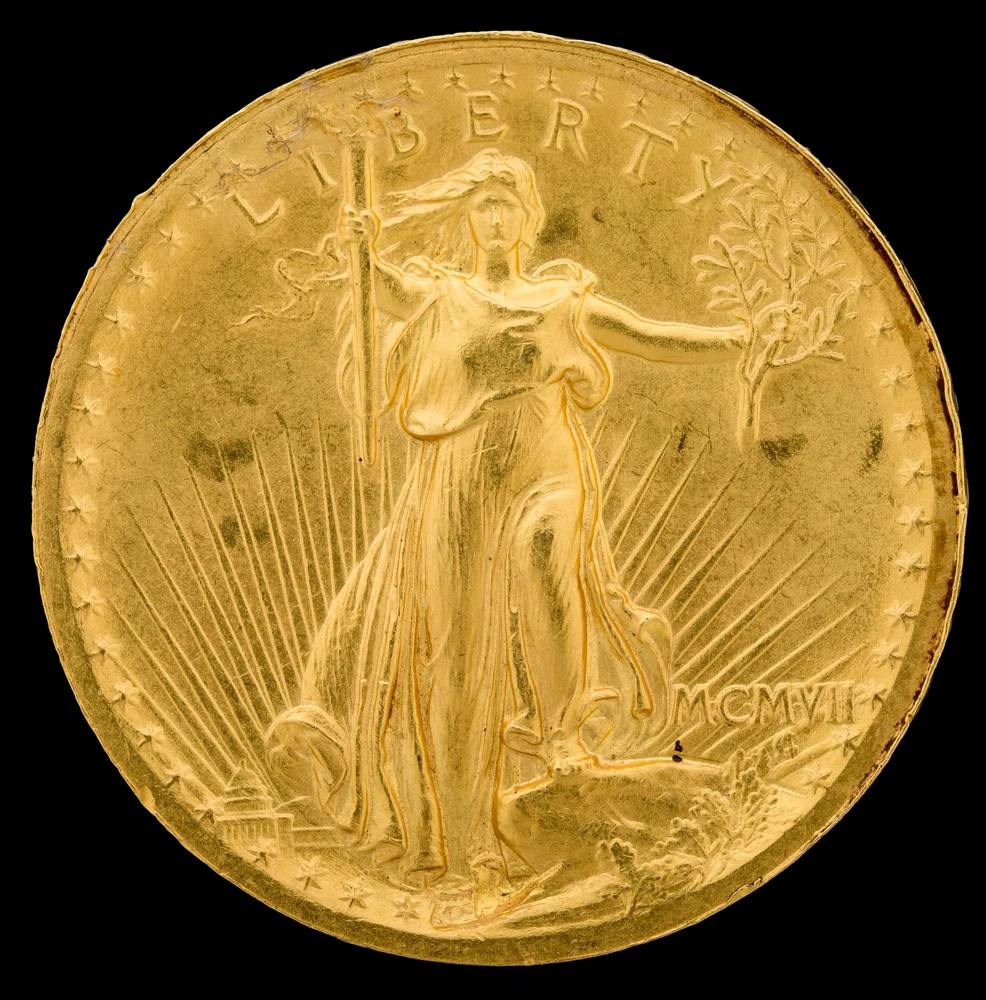
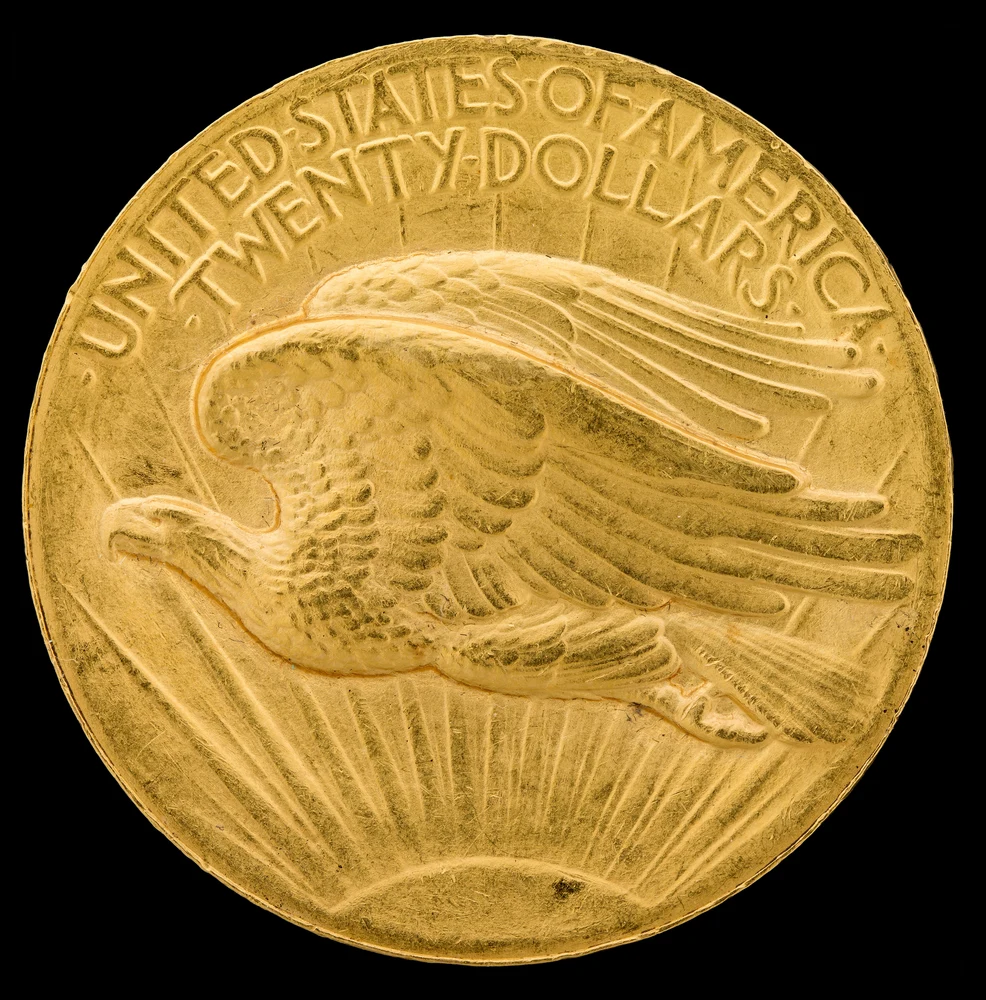
Obverse — 1907 Roman-date high-relief Saint-Gaudens double eagle, excluding ultra-high-relief patterns and the 2009 coin National Numismatic Collection, National Museum of American History; photograph by Jaclyn Nash; paired photograph separated and resized · Image source · Public domain — U.S. federal Smithsonian photographReverse — 1907 Roman-date high-relief Saint-Gaudens double eagle, excluding ultra-high-relief patterns and the 2009 coin National Numismatic Collection, National Museum of American History; photograph by Jaclyn Nash; paired photograph separated and resized · Image source · Public domain — U.S. federal Smithsonian photograph
When a fresh spot bid is available, melt values use fine-metal content × spot bid. CashForCoins guide buying offers use the separately configured percentage for each metal. Selected rare/numismatic coins require an appraisal. Dollar amounts remain unavailable when a fresh quote or buying percentage is missing.
Verified coin specifications
Country
United States
Face denomination
20 U.S. dollars
Composition
90% gold, 10% alloy metal; historical copper or copper/silver alloy
Gross weight (grams)
33.43623756
Fineness
0.9
Fine-metal weight (troy oz)
0.9675
Diameter (mm)
34
Edge
Lettered
Mint
United States Mint; mint facility varies by issue
Mint mark
Varies by issue; inspect reference
Issue years
1907
This profile covers the stated dated issue. Other dates or composition standards require their matching profile.
Source precision
Nominal 516-grain gross standard; .900 gold; exact modern unit conversion stored to 8 decimals; fine-weight override derived from historical standard. Catalog reference diameter, not a tolerance or authentication threshold.
Calculate this coin’s metal content
Formula: specified fine-metal troy ounces × quantity. Dollar melt value additionally requires an approved current metal price.
Obverse: identify the front
Liberty strides forward carrying a torch and olive branch, with stars around the border and MCMVII on the pictured coin. The Roman date denotes 1907. The raised design is visibly different from the Liberty Head portrait on the earlier double eagle.
Reverse: identify the back
An eagle flies above sun rays, with UNITED STATES OF AMERICA and TWENTY DOLLARS at the top. The pictured original lacks a reverse IN GOD WE TRUST motto. The lettered edge requires a separate edge view; it is not demonstrated by these face photos.
History and purpose
The Mint distinguishes several 1907 experimental and production versions. The original 34 mm high-relief form with Roman numerals was followed by a lower-relief, Arabic-date form. The later 2009 revival is a separate product with a different gold specification.
How to identify this variant
Read MCMVII and examine relief and reverse together. A Roman date alone cannot distinguish every original pattern, production subtype or imitation. Use a specialist assessment of relief, rim and edge before asserting an exceptional version.
Understanding its metal content
The historical standard is 516 grains gross at .900 fineness. Multiply 516 by .900 and divide by 480 grains per troy ounce: 0.9675 fine-gold troy oz. Gross metric mass is derived using 0.06479891 g per grain; the displayed 33.43623756 g is a conversion of the nominal standard, not an assay or the measured mass of a worn coin. The remaining 10% is alloy metal; historical legislation permitted copper or a copper/silver alloy.
Dates, varieties and composition changes
This profile is limited to 1907 High Relief production coins. Wire-edge and other rim attribution require closer issue review; the representative does not certify a rim subtype for your coin. Do not include a 2009 coin in this nominal composition.
Melt value versus collector value
High-relief attribution should be established before treating a piece as ordinary gold weight. Preserve holders and provenance. A similar full-length Liberty design on modern bullion does not make those products equivalent collector material.
Authenticity and condition
Compare date, relief, rim, denomination, flying eagle and lettered edge with the appropriate issue reference. These photographs cannot certify relief height, authenticity or edge lettering. Avoid destructive testing and request qualified examination.
Selling this coin
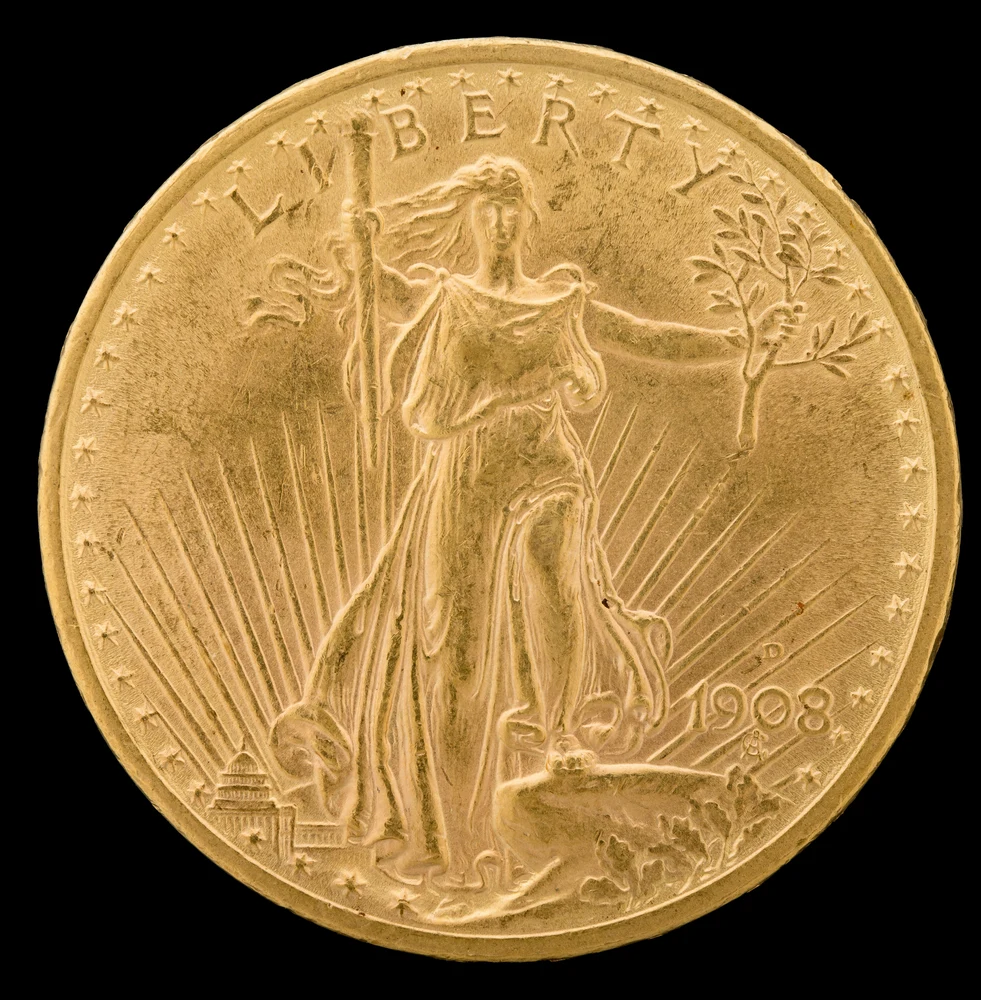
Describe an unconfirmed example as a claimed 1907 High Relief coin pending review. Include both faces, the Roman date and any holder information. Keep it separate from modern 2009 coins and Arabic-date regular-relief double eagles.
Sources and calculation methodology
The historical Mint report and Coinage Act document nominal gold standards; NIST documents the unit conversions. The fine-weight override retains the result from grains instead of recalculating from a rounded catalog gram weight. Design and date references are separate from photographs. These calculations describe correctly identified genuine coins at standard weight. No approved live gold-price feed is configured, so dollar melt values remain unavailable. A collector assessment and a purchase offer are separate from metal content.
Common questions
Is the 2009 Ultra High Relief coin covered here?
No. It is a separate modern product. This profile concerns original 1907 Roman-date High Relief double eagles.
Does MCMVII alone prove a High Relief production coin?
No. Relief, rim, edge and authenticity need examination. Roman numerals also occur in exceptional original versions and can be copied.
References
U.S. Mint: Historical gold eagle designs — identity; dates 1907 high relief; design Saint-Gaudens Liberty and flying eagle; 34 mm Roman-date third original version; edge motto (checked 2026-10-10)
We use cookies to offer you a better browsing experience, analyze site traffic and personalize content. Read about how we use cookies and how you can control them in our Privacy Policy. If you continue to use this site, you consent to our use of cookies.



.jpg)