
.jpg)
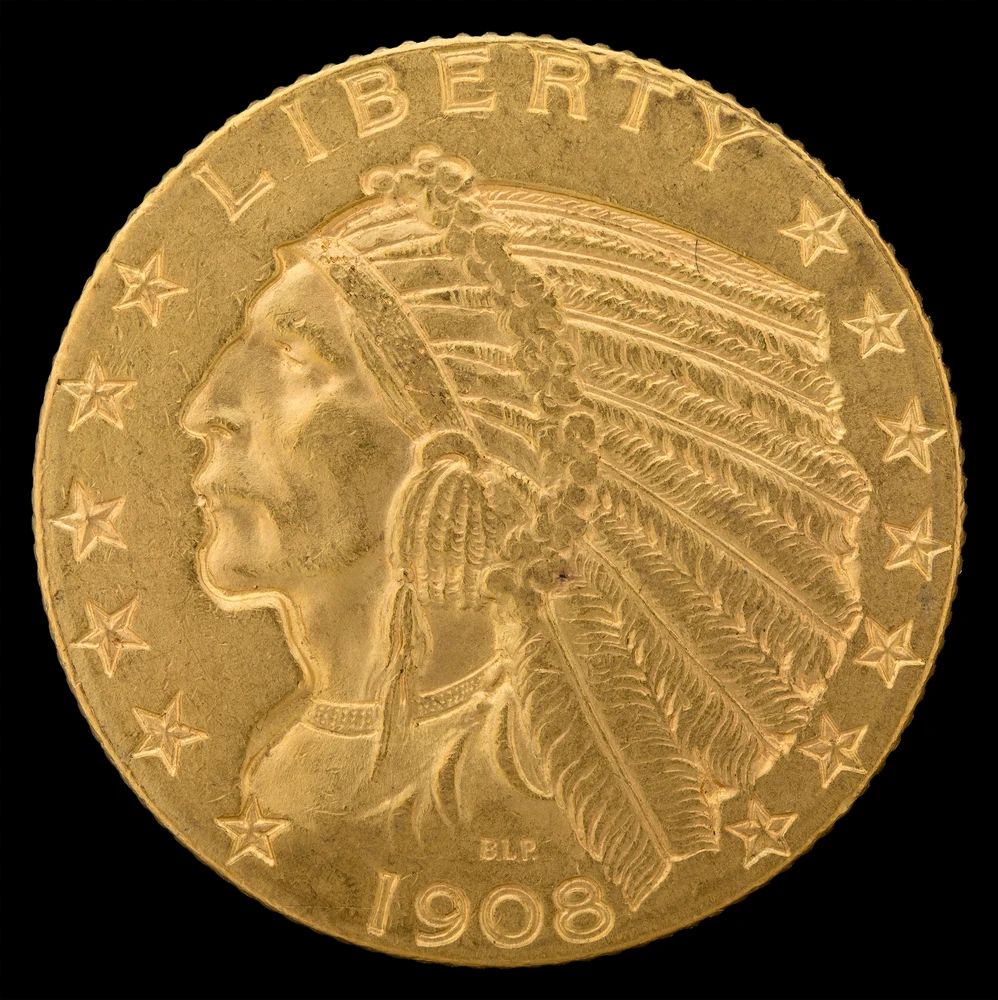
Indian Head Half Eagle — Incuse $5
Photo credits and rights on the linked coin profile.
United States • 90% gold, 10% alloy metal; historical copper or copper/silver alloy
Issue years: 1908–1916, 1929
Fine gold: 0.241875 troy oz
United States • 5 U.S. dollars
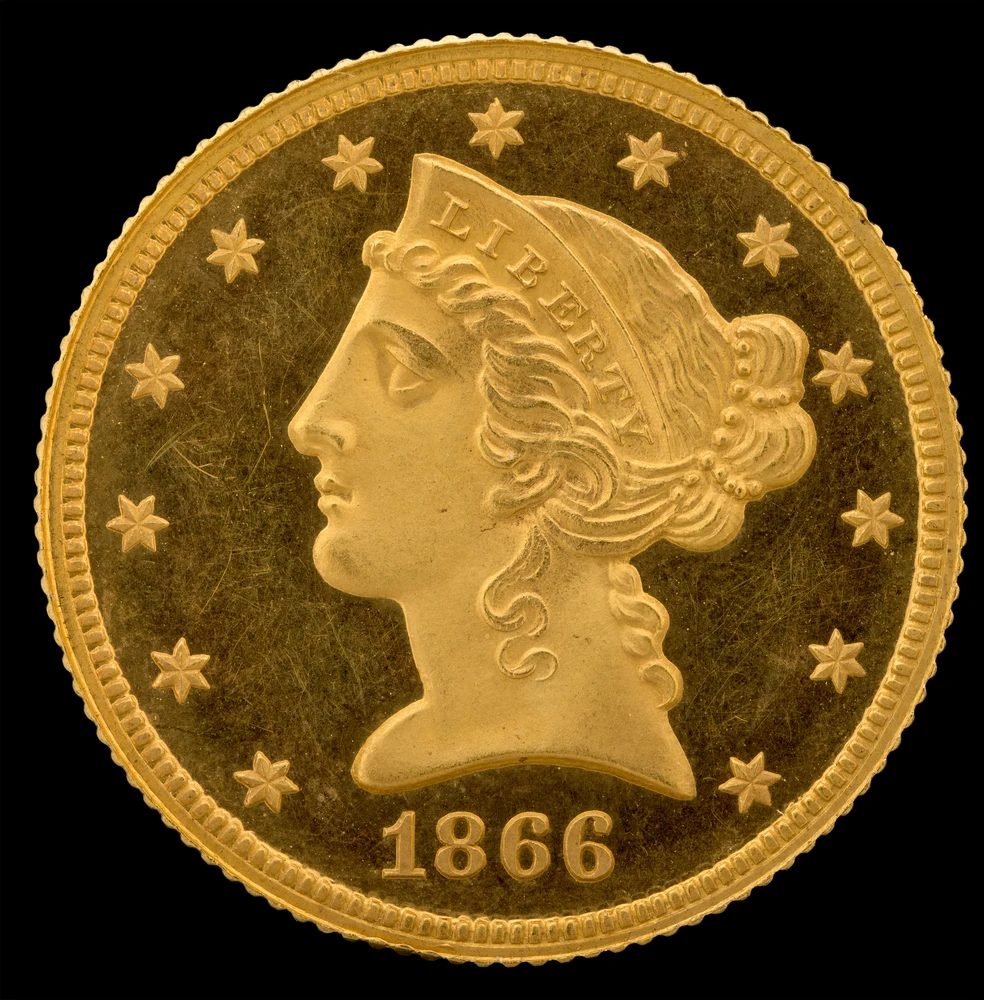
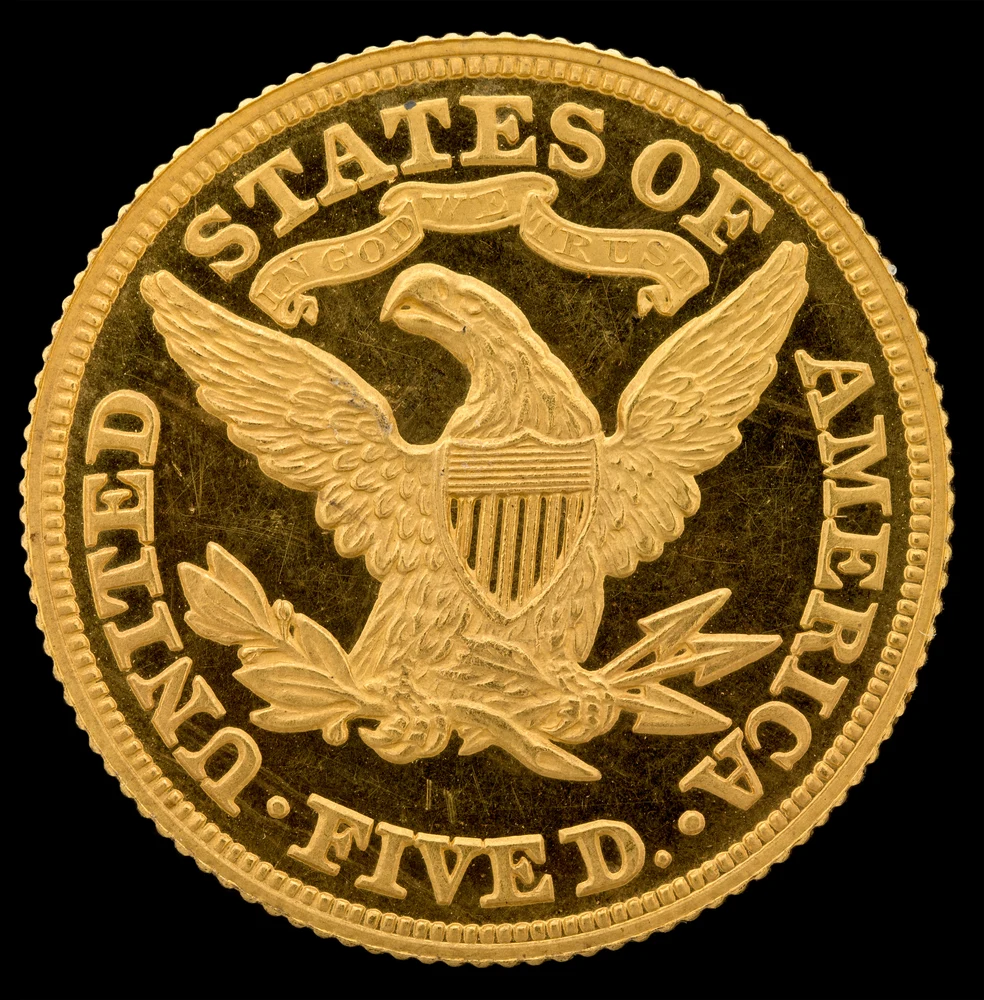
Liberty Head Half Eagle — $5 has nominal fine gold of 0.241875 troy oz (7.523153 g) at the historical .900 standard. The Liberty Head $5 series uses one nominal gold-weight standard across its principal diameter/design changes. The photographed 1866 example belongs to the later, motto-bearing form.
When a fresh spot bid is available, melt values use fine-metal content × spot bid. CashForCoins guide buying offers use the separately configured percentage for each metal. Selected rare/numismatic coins require an appraisal. Dollar amounts remain unavailable when a fresh quote or buying percentage is missing.
No-motto and with-motto designs overlap in 1866. These dates combine all mints; the absence of a particular mint mark must not be inferred from a continuous family period.
Formula: specified fine-metal troy ounces × quantity. Dollar melt value additionally requires an approved current metal price.
Liberty faces left with a coronet, a ring of stars and 1866 below. The portrait resembles other Liberty Head gold denominations. Read the reverse FIVE D. rather than identifying the denomination from the head alone.
The eagle carries a shield, arrows and a branch, with FIVE D. at the bottom. IN GOD WE TRUST appears above the eagle on this 1866 representative. Earlier no-motto issues lack that banner.
The Mint dates the Liberty Head half eagle’s introduction to 1839 and records the reverse motto change in 1866. Specialist references separate early broad-diameter pieces and later standard-diameter issues; the date and subtype remain relevant physical clues.
The stored 21.6 mm diameter describes the later form, including this 1866 example. The 1839 and some 1840 broad-mill issues are approximately 22.5 mm in the specialist reference. The same nominal mass/gold calculation applies, but the later diameter must not be imposed on those earlier coins.
The historical standard is 129 grains gross at .900 fineness. Multiply 129 by .900 and divide by 480 grains per troy ounce: 0.241875 fine-gold troy oz. Gross metric mass is derived using 0.06479891 g per grain; the displayed 8.35905939 g is a conversion of the nominal standard, not an assay or the measured mass of a worn coin. The remaining 10% is alloy metal; historical legislation permitted copper or a copper/silver alloy.
The series spans 1839–1908, with early portrait and diameter differences and the 1866 motto transition. Record the actual date and motto state. A broad date selector does not resolve a subtype or assert every mint-year combination.
Keep early broad-mill and unusual issue details separate in your notes. A design change or diameter difference is not, by itself, evidence of a counterfeit or a particular grade. Preserve original surfaces and grading information for review.
Compare FIVE D., the portrait, eagle, date, edge and the diameter appropriate to that issue. A mismatch with the later 21.6 mm reference requires subtype review first. Avoid altering lettering or polishing a suspected early piece.
Identify the lot as $5 Liberty Head half eagles and list dates and mint marks. For an early coin, include a coin-only diameter measurement if available and describe it as measured evidence. Do not mix quarter eagles into the same nominal-weight line.
The historical Mint report and Coinage Act document nominal gold standards; NIST documents the unit conversions. The fine-weight override retains the result from grains instead of recalculating from a rounded catalog gram weight. Design and date references are separate from photographs. These calculations describe correctly identified genuine coins at standard weight. No approved live gold-price feed is configured, so dollar melt values remain unavailable. A collector assessment and a purchase offer are separate from metal content.
No. The stored figure describes the later form. The specialist reference identifies 1839 and some 1840 broad-mill issues at about 22.5 mm; use issue-specific dimensions.
No. The principal no-motto and motto forms share the historical $5 standard and nominal 0.241875 troy oz fine gold.
Content maintained by CashForCoins. Last substantive record update: 2026-10-10. Report a specification or attribution issue through our contact page.
Photo credits and rights on the linked coin profile.
United States • 90% gold, 10% alloy metal; historical copper or copper/silver alloy
Issue years: 1908–1916, 1929
Fine gold: 0.241875 troy oz
Photographs can help identify your coin. An appraisal may consider authenticity, condition and collector demand as well as metal content.
Request a photo appraisal View current gold coin buying information
