
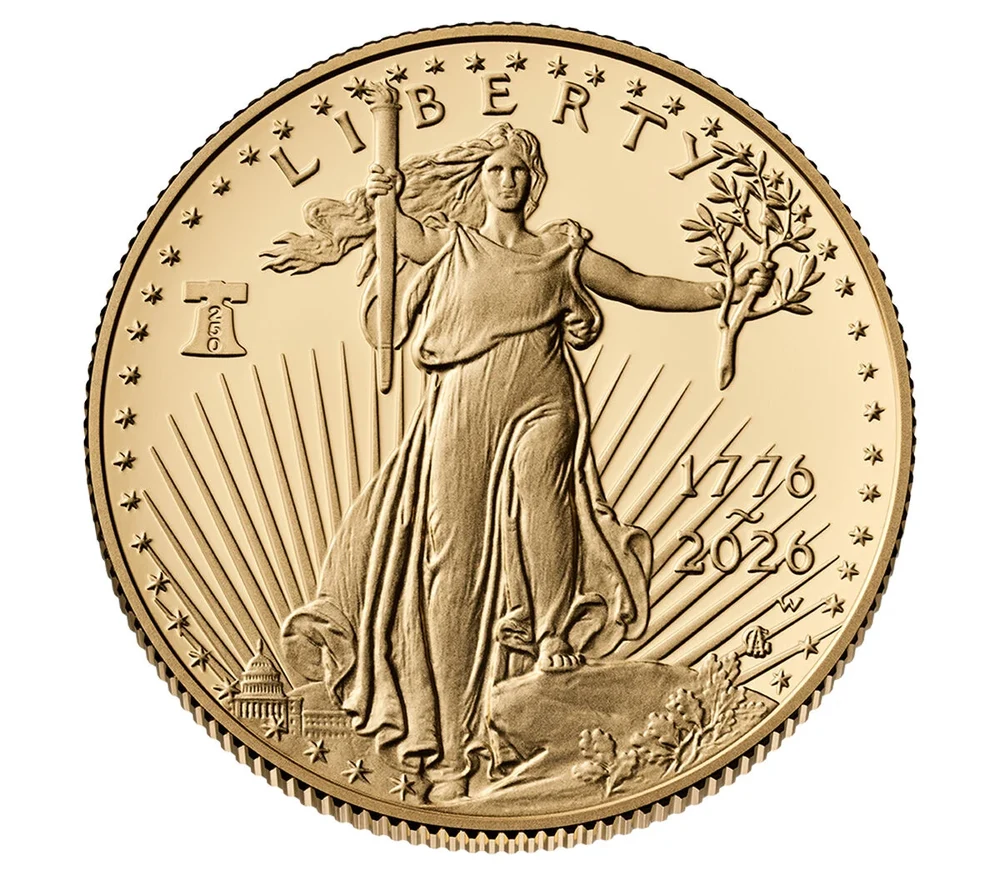
American Gold Eagle, Half Ounce — Eagle Portrait
Photo credits and rights on the linked coin profile.
United States • 91.67% gold, 3% silver; balance copper
Series dates: 2021–2026 (continuing)
Fine gold: 0.500000 troy oz
United States • 5 U.S. dollars
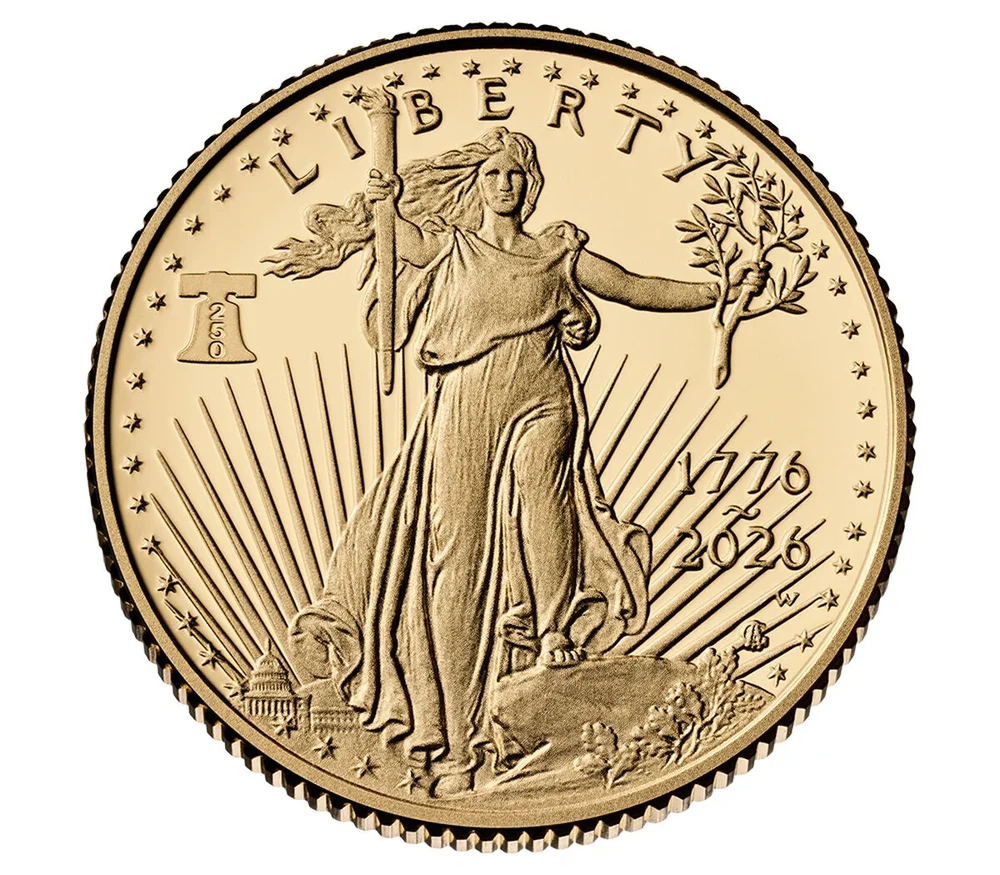
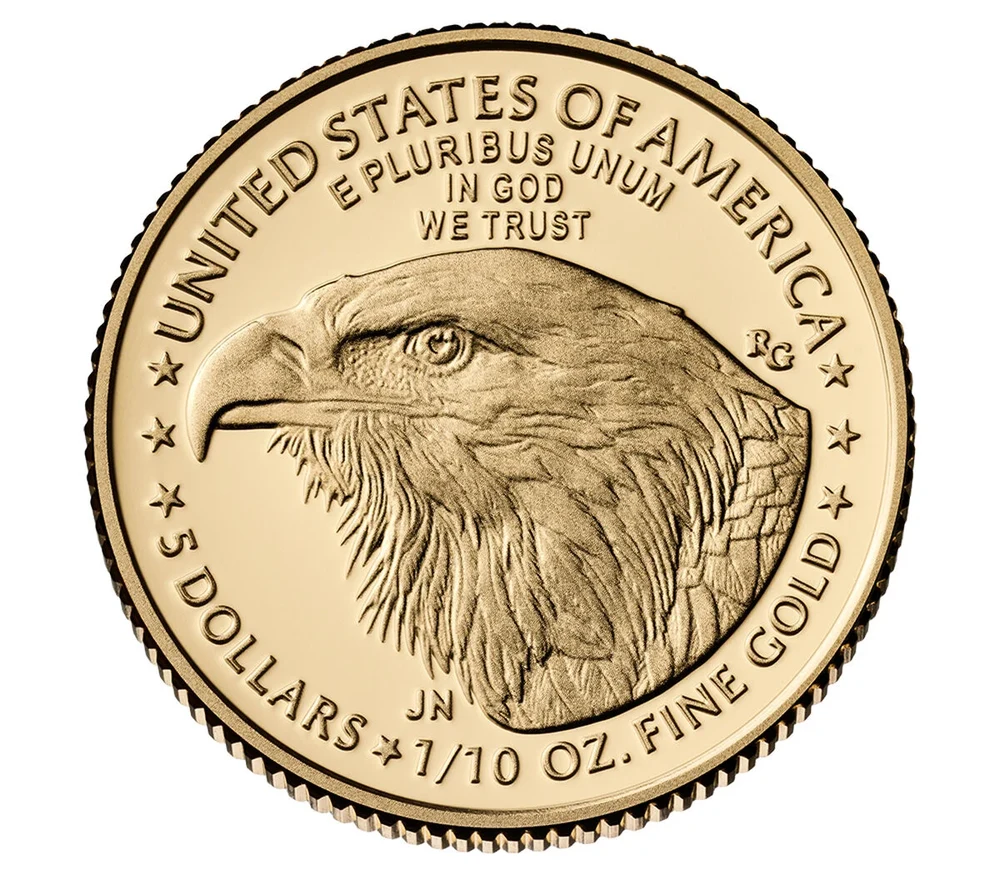
The eagle-portrait tenth ounce American Gold Eagle has a 5-dollar denomination and 0.1 fine gold troy ounce per correctly identified coin. The cited reference reports 3.393 g gross mass and .9167 gold fineness. These genuine Mint photographs show a 1776–2026-W proof reference. Confirm the exact fraction and the portrait reverse before using this calculator.
When a fresh spot bid is available, melt values use fine-metal content × spot bid. CashForCoins guide buying offers use the separately configured percentage for each metal. Selected rare/numismatic coins require an appraisal. Dollar amounts remain unavailable when a fresh quote or buying percentage is missing.
These verified issue years cover the portrait reverse introduced in 2021. The 2026 proof carries 1776–2026. Future dates and every mint/finish combination are not certified.
Formula: specified fine-metal troy ounces × quantity. Dollar melt value additionally requires an approved current metal price.
The small coin retains full-length Liberty, a torch, olive branch, stars and the Capitol. In the actual reference photograph the right-hand area contains W, the 1776–2026 dual dates and a Liberty Bell 250 privy. Magnify these genuine details rather than treating a familiar Liberty silhouette or a small gold-colored disk as sufficient identification.
A detailed eagle head appears above the inscriptions 5 DOLLARS and 1/10 OZ. FINE GOLD. The denomination and fraction are especially important on this small 16.50 mm coin. Do not confuse the five-dollar face value with a historic half eagle or a five-dollar commemorative: those have different designs and gold amounts.
The American Eagle gold program began in 1986 using Liberty adapted from Augustus Saint-Gaudens and a nesting-eagle reverse. During 2021 the Mint introduced a refreshed obverse and an eagle portrait reverse. This entry starts with that later design, so a 2021 date by itself cannot decide which reverse identity applies. Its fine-gold specification does not turn the modern coin into the older gold denomination whose name was eagle.
Read the entire 1/10 inscription and five-dollar denomination from a sharp photograph of the reverse. The issuer diameter is 16.50 mm, and the cited reference gross reference is 3.393 g. A holder changes a scale reading. A portrait-reverse tenth is distinct from a nesting-eagle tenth even though their nominal fine-gold amounts agree.
Three matching coins total 10.179 reference gross grams and 0.3 fine gold troy ounces. The ounce fraction states fine gold, while the heavier gross mass includes the alloy. Multiplying the displayed gross mass by .9167 and dividing by 31.1034768 gives approximately 0.100000 ounce per coin. That separate rounded-input result does not replace the cited source's reported AGW. The issuer also lists 3% silver and balance copper; this gold calculator's zero in the silver-coin column is not a claim that the alloy contains no silver.
This portrait-reverse identity begins during 2021 and continues beyond that transition year. Inspect both faces of 2021 pieces because the original nesting-eagle design was also issued. The illustrated proof bears W; that does not assign W or a proof finish to every bullion specimen. The 2026 anniversary proofs have 1776–2026 dual dates and Liberty Bell 250 privies. Other dates must be compared with their actual issue records.
Identify proof finish, the actual date and any special privy before evaluating collector interest. A genuine issuer reference does not grade a visitor’s coin. Keep matching packaging and certification with the specimen and distinguish reference fine-gold content from an individual appraisal. Neither a production limit nor a small fraction guarantees a particular premium.
Compare denomination, fraction, complete date, both designs and the edge with the appropriate issue record. Measure the bare coin when comparing sourced dimensions; a capsule or holder contributes extra mass. Plausible weight and familiar artwork cannot independently establish authenticity. Preserve the surface without cleaning or scratching, obtain clear photographs, and keep an uncertain piece outside the counted total until examined.
Sort tenth-ounce Eagles separately and count only clearly identified pieces. Ten matching tenths represent one reference gold ounce; three represent .3 ounce. Photograph the fraction, dates and small marks with sufficient detail, preserve proof packaging, and request appraisal using this specific identity. A fractional format alone does not establish a particular premium or a purchase price.
The owner-selected U.S. gold reference table controls 3.393 g gross, .9167 gold fineness and 0.1 troy oz AGW. Its broad program row begins in 1986; the Mint independently dates the eagle-portrait design to 2021. The Mint supplies the 16.50 mm diameter, 3% silver with balance copper, and the actual photographed proof issue. The cited source's reported AGW is used directly rather than deriving extra precision from rounded mass and fineness. The photo source, visible denomination and original issuer rights were reviewed separately from the metal table. The continuing series interval does not certify every intervening date or finish. Reference inputs describe an identified type rather than an assay of a customer specimen. A dated bid-based melt value and coin-guide estimate appear when a valid market quote is available; otherwise the calculator reports metal content without showing an invented dollar amount.
The cited source's 0.1-ounce AGW reference gives 0.3 fine gold troy ounces for three correctly identified matching coins. This is a reference quantity, separate from an appraisal or market offer.
No. The reverse changed during 2021. Compare the actual eagle portrait with the earlier nesting-eagle design; the year alone cannot select the correct identity.
No. This entry requires the Gold Eagle portrait, 5 DOLLARS and 1/10 OZ. FINE GOLD. Modern five-dollar commemoratives and historic half eagles have separate metal standards and must use their own profiles.
Content maintained by CashForCoins. Last substantive record update: 2026-10-13. Report a specification or attribution issue through our contact page.
Photo credits and rights on the linked coin profile.
United States • 91.67% gold, 3% silver; balance copper
Series dates: 2021–2026 (continuing)
Fine gold: 0.500000 troy oz
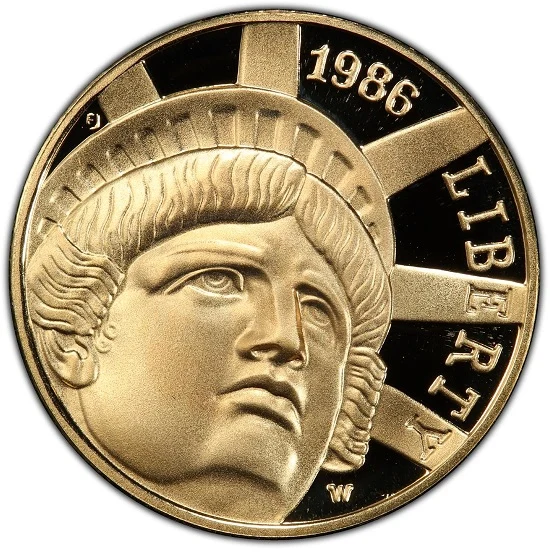
Photo credits and rights on the linked coin profile.
United States • 90% gold; 10% alloy
Issue years: 1986
Fine gold: 0.241900 troy oz
Photographs can help identify your coin. An appraisal may consider authenticity, condition and collector demand as well as metal content.
Request a photo appraisal View current gold coin buying information