
United States • 5 U.S. dollars
2008-W American Gold Buffalo — Tenth Ounce
The reviewed 2008-W American Gold Buffalo tenth-ounce issue has a $5 denomination and .9999 gold purity. The Mint offered this fraction in proof and uncirculated versions in 2008. The historical actual-year list for this record is 2008 only. Match the complete fractional weight and denomination instead of assigning every Fraser bison design a full ounce of gold.
Images supplied by CashForCoins; used with permission. · Image source · CashForCoins website use authorized by site owner
Images supplied by CashForCoins; used with permission. · Image source · CashForCoins website use authorized by site owner
When a fresh spot bid is available, melt values use fine-metal content × spot bid. CashForCoins guide buying offers use the separately configured percentage for each metal. Selected rare/numismatic coins require an appraisal. Dollar amounts remain unavailable when a fresh quote or buying percentage is missing.
Verified coin specifications
- Country
- United States
- Face denomination
- 5 U.S. dollars
- Composition
- 99.99% gold
- Fineness
- 0.9999
- Fine-metal weight (troy oz)
- 0.1
- Diameter (mm)
- 16.5
- Edge
- Reeded
- Mint
- United States Mint at West Point
- Mint mark
- W, portrait side below feathers
- Restrikes
- Actual2008 proof and burnished/uncirculated fractions only; announced future issues excluded
- Issue years
- 2008
Normal issue dates within this profile. Read the guide for changing designs, mint/finish differences and excluded material standards.
- Source precision
- 2008-W 5 U.S. dollars proof and burnished collector issue. The U.S. Mint states a 0.1-troy-ounce gold fraction and .9999 fineness. A catalog rounds the nominal mass to 3.11 g; that rounded number is not an exact mass-times-purity calculator input. Use the issuer's stated fine gold amount, leave gross mass unasserted, and retain the actual source entries in References. The face year is 2008 only. The calculator uses the independently stated fine-metal amount directly. Gross mass is unavailable here; a rounded fine-weight display or inconsistent gross reference is not presented as a verified gross measurement.
Calculate this coin’s metal content
Formula: specified fine-metal troy ounces × quantity. Dollar melt value additionally requires an approved current metal price.
Obverse: identify the front
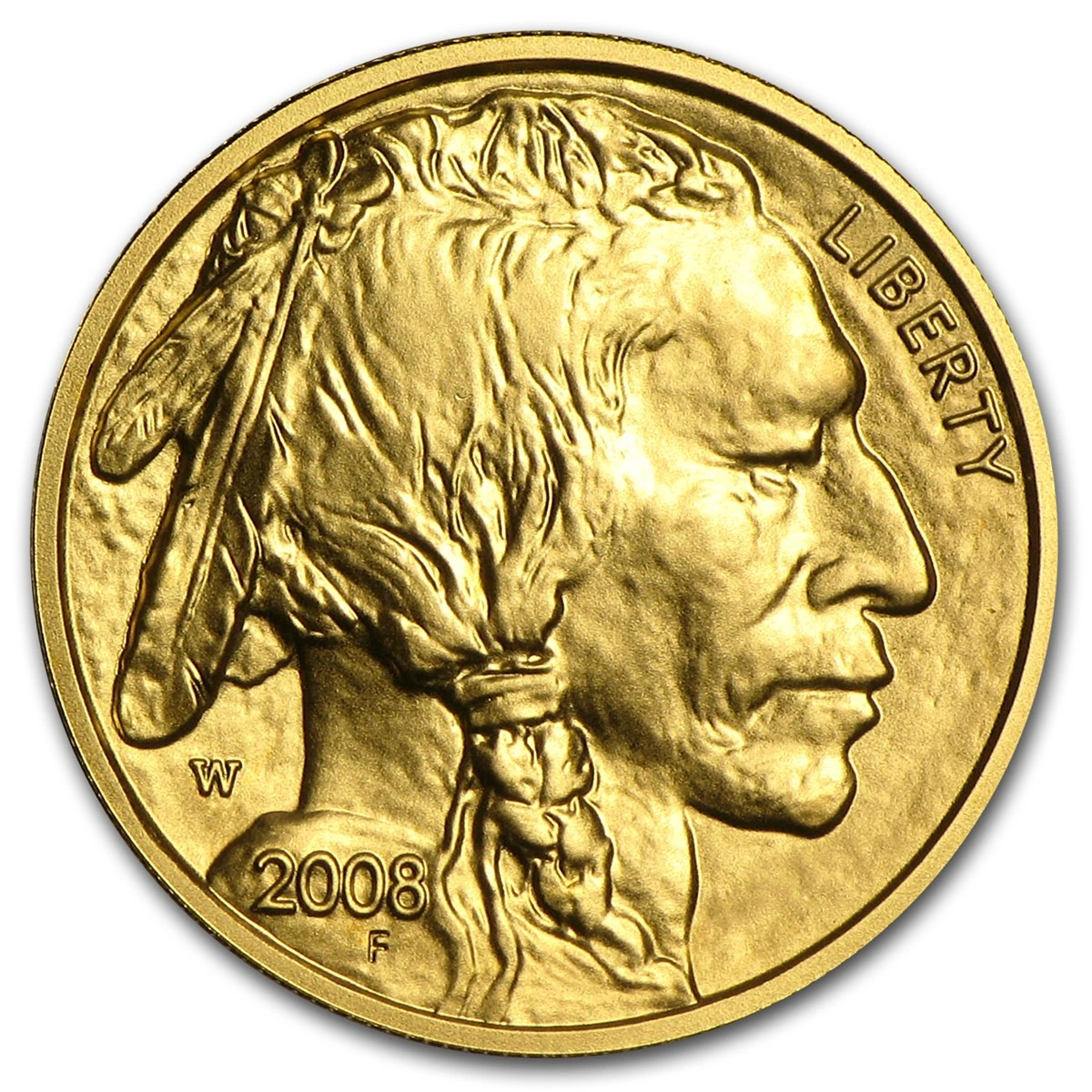
James Earle Fraser’s Native American profile appears with LIBERTY, the actual date and the West Point W mark. The original Mint release attributes this design to the 1913 Type I Buffalo nickel. A familiar profile alone cannot distinguish a modern gold fraction from a base-metal nickel or another ounce size. Preserve the complete rim and marking locations in reference photography.
Reverse: identify the back
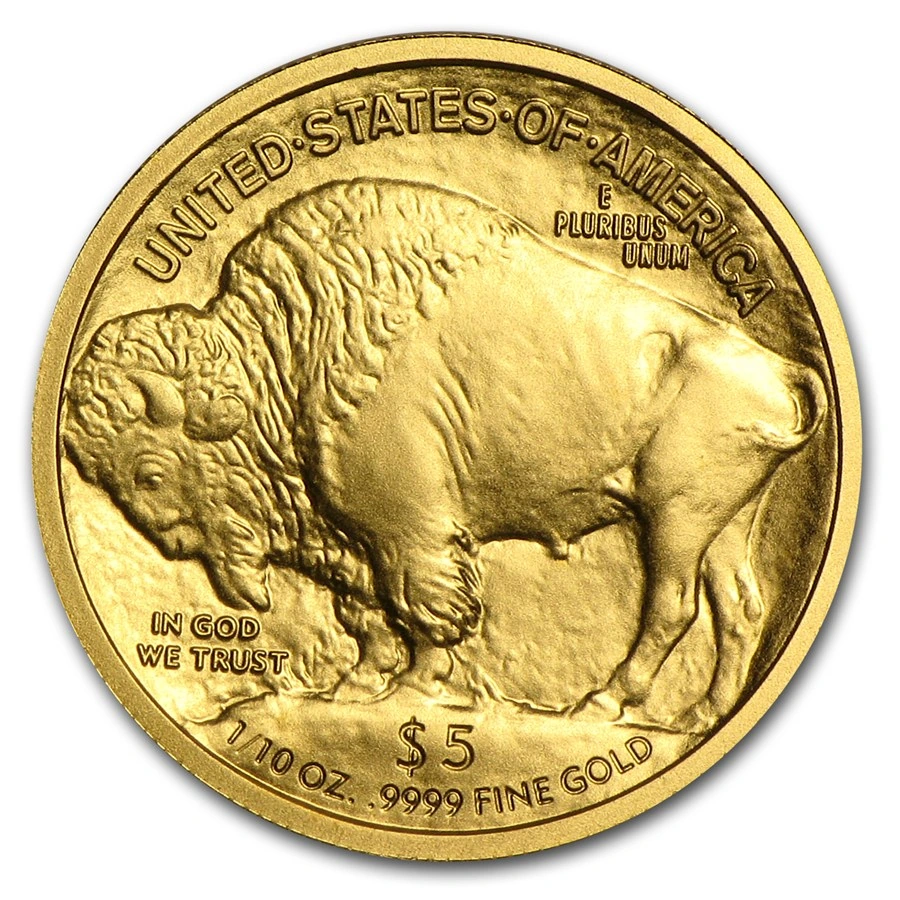
The bison face includes the $5 value, fractional gold weight and national inscriptions. Read the .1-ounce marking before selecting the coin. Other sizes share the basic imagery but carry different monetary denominations. A reflective proof face and a burnished collector face are separate finishes; they do not create another gold fraction or justify using an unrelated picture.
History and purpose
The gold program began with a full-ounce issue in 2006. The original 2008 issuer release expanded collector offerings to half, quarter and tenth fractions in both proof and uncirculated versions. Those collector products differ from ordinary full-ounce bullion. Preserve the 2008 dated identity and original packaging. A future scheduled product does not establish that a new annual coin already exists on the review date.
How to identify this variant
Confirm the 2008 date, W mint mark, 5 U.S. dollars denomination, 0.1-troy-ounce gold marking and 16.5-mm matched catalog diameter. The edge is reeded. Proof and burnished finishes differ; a holder label or four-coin set does not change the coin's denomination or metal content.
Understanding its metal content
The U.S. Mint describes this as a 0.1-troy-ounce .9999 gold coin. The calculator uses that stated fine-gold amount for each coin. Published nominal gram masses are rounded and are not used to derive or assert an exact gross mass. Three matching coins contain 0.3 fine troy ounces before wear or testing. A metal estimate does not establish collector value or a binding offer.
The calculator uses the independently stated fine-metal amount directly. Gross mass is unavailable here; a rounded fine-weight display or inconsistent gross reference is not presented as a verified gross measurement.
Dates, varieties and composition changes
The accepted historical face year is 2008. Proof and burnished/uncirculated variants carry the W mark and must retain the exact finish attribution. Certification signatures and holder artwork are packaging labels, not automatically different struck-coin die varieties. No future announced coin or proof-only presentation is silently added to the normal historical dated record. Preserve original capsules, cases and certificates with their matching denomination.
Melt value versus collector value
Treat proof and burnished fractions as individually attributable collector coins before a metal-content sale. Their original certificates and cases help preserve denomination and finish context. This guide assigns no grade, rarity label, market price or guaranteed premium. An unfamiliar finish, holder label or damaged surface requires review. Do not clean a 2008 fraction merely to improve the appearance of a submission photograph.
Authenticity and condition
Document the complete date, mint mark, denomination, fractional inscription and both full rims. Compare the appropriate size rather than a full-ounce reference. Matching color, packaging or one dimension alone cannot authenticate the specimen. Keep plated replicas, altered pieces and uncertain weights outside a confirmed metal total. Avoid scraping, polishing or acid testing a collector coin to resolve its attribution.
Selling this coin
Separate 2008 half, quarter and tenth denominations, then retain the proof or burnished designation with original packaging. Provide full visible two-side photographs and any grading documentation through the existing CashForCoins appraisal process. A verified coin-content record supports an examined offer; it does not guarantee a purchase amount. Live dollar values remain unavailable when no provider is configured.
Sources and calculation methodology
The calculator retains 0.1 fine troy ounce per matching coin. The retained fineness is 0.9999, and the nominal diameter is 16.5 mm. Gross mass is unavailable; the declared fine-metal content is used directly without inventing a gross measurement. The references below distinguish the exact denomination and material standard from similar-looking coins. Reported fine content and rounded gross-mass arithmetic are separate conventions. The dated photographs supplied for CashForCoins use illustrate the identified type; they do not authenticate or grade an individual holding. A live market bid is obtained separately from specification references.
Common questions
Are holder-signature labels separate coin die varieties?
A holder label does not establish another struck-coin design, material or metal weight. Check the actual coin independently.Can the original five-cent Buffalo nickel use this gold record?
No. The historic nickel and the modern .9999 gold coin are different denominations and materials.Does an announced future product establish an issued year?
No. Only an actual verified dated issue belongs in the issued-year list.References
- Original2008 U.S. Mint fractional launch — actual2008; .1-ounce $5; proof and uncirculated;W mint;Fraser TypeI designs;.9999 gold; identity 2008-W fractional Gold Buffalo; fine weight tenth ounce; fineness .9999; dates 2008 launch (checked 2026-10-16)
- Matching PCGS exact fractional physical specification — actual2008;diameter16.5mm;reeded edge;gold purity;rounded mass source conflict documented (checked 2026-10-16)
Issue-year references
Content maintained by CashForCoins. Last substantive record update: 2026-10-16. Report a specification or attribution issue through our contact page.
Have this coin or a collection?
Photographs can help identify your coin. An appraisal may consider authenticity, condition and collector demand as well as metal content.
Request a photo appraisal View current gold coin buying information