

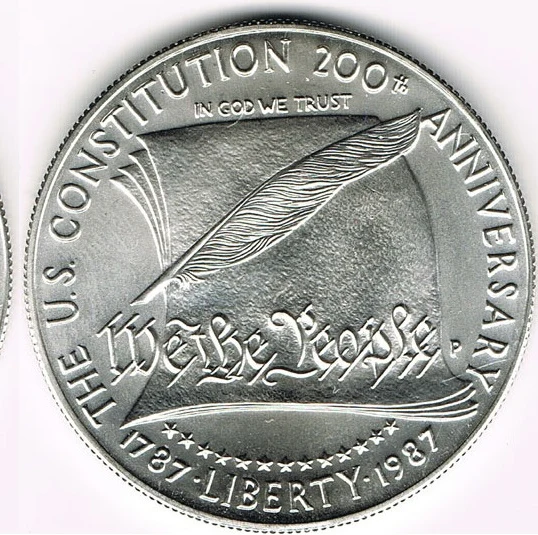
1987 Constitution Bicentennial Silver Dollar
Photo credits and rights on the linked coin profile.
United States • 90.000% silver; balance copper
Issue years: 1987
Fine silver: 0.773400 troy oz
United States • 5 U.S. dollars
1987 Constitution Five-Dollar Gold has a reference actual gold weight of .2419 troy ounce per correctly identified coin in the owner-selected reference table. Its displayed gross mass is 8.36 g and gold fineness is .900. Confirm the five-dollar denomination and both designs before including it in a gold count. The genuine photographs illustrate an issuer proof example commemorating the Constitution bicentennial.
When a fresh spot bid is available, melt values use fine-metal content × spot bid. CashForCoins guide buying offers use the separately configured percentage for each metal. Selected rare/numismatic coins require an appraisal. Dollar amounts remain unavailable when a fresh quote or buying percentage is missing.
This profile covers the stated dated issue. Other dates or composition standards require their matching profile.
Formula: specified fine-metal troy ounces × quantity. Dollar melt value additionally requires an approved current metal price.
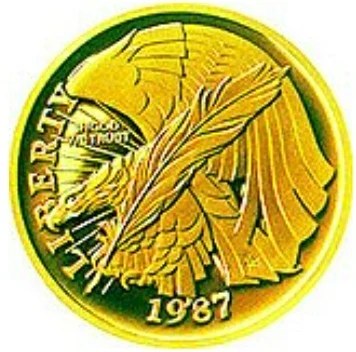
The genuine proof photograph shows a stylized eagle holding a quill. LIBERTY, IN GOD WE TRUST and the date 1987 accompany the angular design. Compare the actual complete face rather than identifying the issue from a holder’s program name alone.
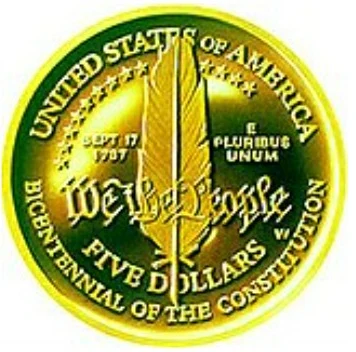
A vertical quill appears behind We the People. Thirteen stars surround the central design, while FIVE DOLLARS and SEPT 17, 1787 provide useful identifying inscriptions. The denomination belongs to the gold piece; the related silver commemorative has different relief and a one-dollar value.
The Mint issued this gold commemorative in 1987 for the Constitution bicentennial and credits Marcel Jovine with both designs. Its archived program distinguishes the gold five-dollar coin from the silver dollar. The issue’s dated reference photographs document designs, not a surviving population or current sale price.
Match the eagle-and-quill obverse and We the People reverse, then confirm FIVE DOLLARS and 1987. Its 21.59 mm reference diameter differs from the program’s larger silver dollar. Size is one identification aid, not an independent test of purity or authenticity.
Three matching pieces total 25.08 reference gross grams and .7257 fine gold troy ounce. Multiplying the separately rounded 8.36 g by .900 gives 7.524 g of nominal gold, approximately 0.241902 troy ounce per piece. That displayed-mass product explains the source precision; it does not replace the cited source’s reported .2419 AGW or measure a worn individual coin. Neither a five-dollar face value nor a gold-colored surface is a melt-price quotation.
This entry retains the 1987-dated five-dollar gold identity. Proof and uncirculated finishes belong to the issue and require examination of the actual piece. The illustrated government proof is a representative specimen, not a verified grade for a visitor’s coin. Do not infer another year, denomination or composition from a similar program name. Keep any packaging and certificate with the matching coin.
Metal content and collector assessment answer different questions. Preserve proof surfaces, packaging, certificates and issue records for an individual appraisal. The guide does not infer rarity, assign a condition grade or promise a premium from the date alone. A reference photograph also does not verify a visitor’s packaging or certify that a superficially similar piece is genuine.
Record both faces, the date, mint mark, diameter and bare-coin weight. A capsule or holder changes a scale reading and should not be counted as coin metal. Matching dimensions help identify a candidate but do not prove authenticity. Avoid polishing, scratching or acid-testing a collectible surface. Keep an uncertain piece out of the quantity total until the actual coin and its alloy have been examined.
Sort these commemoratives by denomination and actual design before counting. Photograph the complete faces and visible mint mark, record the quantity and retain any relevant original paperwork. The appraisal link carries this identity and the entered count so the recipient has useful context. A reference gold amount is not a purchase offer, and no unavailable market price is presented as zero.
The owner-selected modern commemorative reference five-dollar row supplies 8.36 g gross, .900 fineness and .2419 oz AGW. The authorizing law specifies 8.359 g; its .850 inch diameter converts to 21.59 mm. The rounded reference gross display is retained, and its separately reported AGW governs the calculator. Sources for metal inputs, design history and photograph rights were reviewed separately. The figures describe a reference coin and do not constitute a customer assay. A dated bid-based melt value and coin-guide estimate appear when a valid market quote is available; otherwise the calculator reports metal content without showing an invented dollar amount. The Constitution photograph has modest original resolution; the complete legible faces are retained without invented or upscaled detail.
cited reference’s reported .2419 oz AGW per coin gives .7257 fine gold troy ounce for three correctly identified pieces.
No. Match FIVE DOLLARS and both gold-coin designs. The program’s silver dollar has its own denomination, alloy and calculator.
The guide retains the owner-selected reference rounded gross mass and separately reported AGW. The original law is disclosed as a nominal specification; neither value assays an individual specimen.
Content maintained by CashForCoins. Last substantive record update: 2026-10-13. Report a specification or attribution issue through our contact page.
Photo credits and rights on the linked coin profile.
United States • 90.000% silver; balance copper
Issue years: 1987
Fine silver: 0.773400 troy oz
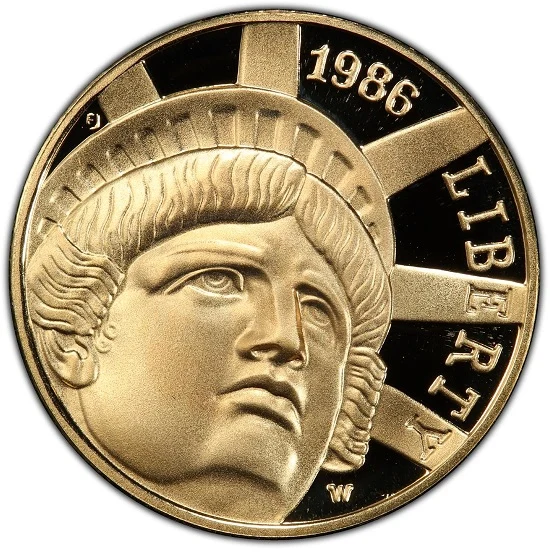
Photo credits and rights on the linked coin profile.
United States • 90% gold; 10% alloy
Issue years: 1986
Fine gold: 0.241900 troy oz
Photographs can help identify your coin. An appraisal may consider authenticity, condition and collector demand as well as metal content.
Request a photo appraisal View current gold coin buying information